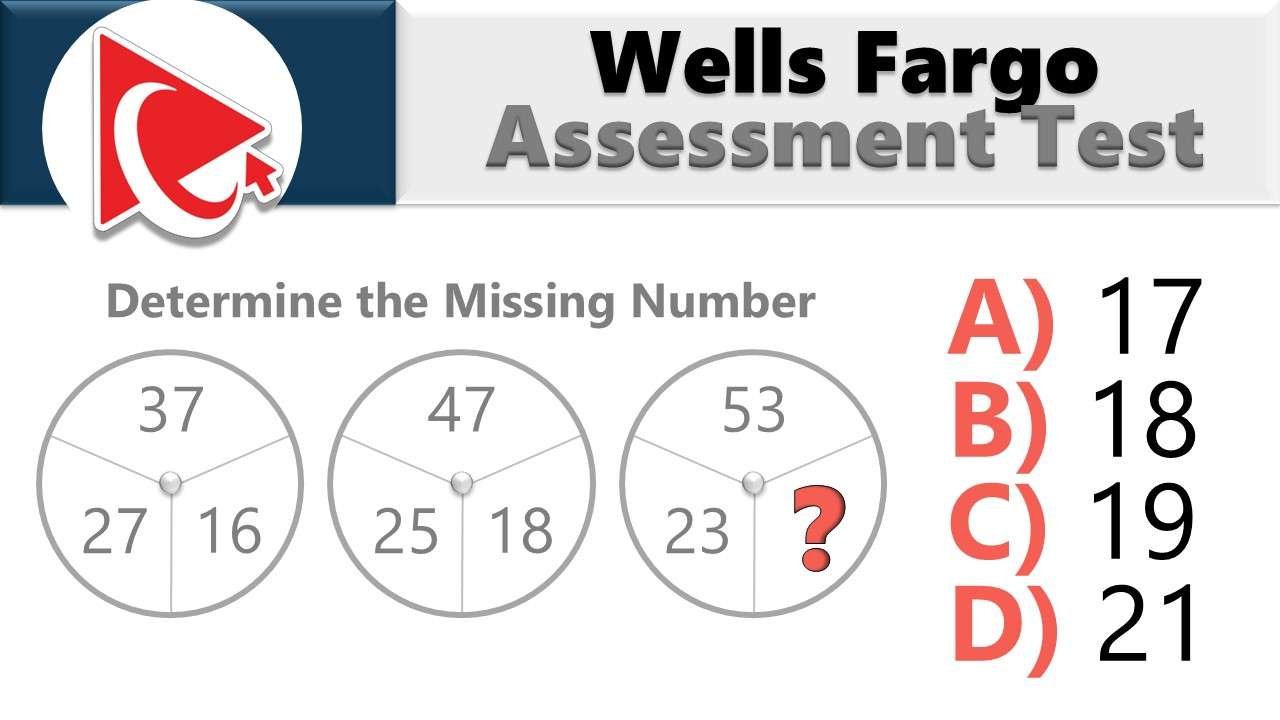
Summary
- The Wells Fargo Assessment Test is designed to evaluate candidates' skills and compatibility with the company's values and job requirements.
- To succeed in the hiring process, applicants should focus on developing strong communication, problem-solving, and customer service skills, as these are often emphasized in the assessments.
- Preparing thoroughly for the pre-employment assessment is crucial, as it helps candidates understand the test format and types of questions they might face, allowing them to perform with confidence.
- Effective preparation increases the likelihood of standing out to hiring managers, ultimately improving the chances of being hired by Wells Fargo.
- For a comprehensive evaluation of your skills and personality, consider recommended assessments such as the Caliper Profile Personality Test, which measures traits and potential job performance, and the Accounting Assessment Test, which assesses your accounting knowledge and skills.
|
?
|
Can't Find Your Test? Download Sample Assessment Test Questions PDF to find the test you need. Or if you still have questions about how to practice for your upcoming test, please contact us, and we'll get back to you within 24 hours. |
Not what you are looking for? If you know the test name, type it in the text box below and click the Search button (e.g., "CCAT" or "Amazon").
What is Wells Fargo
Wells Fargo, founded in 1852 by Henry Wells and William Fargo in San Francisco, is a multinational financial services company known for its comprehensive range of banking, investment, and mortgage products and services. The company's mission is to help customers succeed financially by providing innovative financial solutions and exceptional customer service, emphasizing its core values of diversity, integrity, and leadership. Wells Fargo is a significant player in the financial industry, being one of the largest banks in the United States by assets, and it offers a wide array of services, including retail and commercial banking, wealth management, and insurance.
Recent achievements include Wells Fargo's commitment to environmental sustainability, demonstrated by its $200 billion sustainable finance commitment by 2030, and its active role in advancing digital banking technologies. The company differentiates itself from competitors through its extensive branch network, strong community ties, and a comprehensive suite of financial products that cater to both individuals and businesses. Additionally, Wells Fargo's focus on rebuilding trust with its customers and improving operational efficiency following past controversies is a key aspect of its strategy to maintain competitiveness in the industry.
Navigating Job Application Process
The hiring process at Wells Fargo is structured to ensure that candidates not only have the necessary skills and experience but also align with the company's values and culture.
By thoroughly preparing and understanding each stage of Wells Fargo’s hiring process, candidates can increase their chances of securing a position with the company.
Here is a detailed overview of the typical steps involved, along with some unique aspects and recommendations for candidates:
1. Application Submission
- Process: Candidates begin by submitting their application through the Wells Fargo careers website or job portals. This involves creating a profile, uploading a resume, and filling out an online application form.
- Recommendation: Tailor your resume and cover letter to highlight relevant experience and skills, and ensure keywords from the job description are included to pass through initial automated screenings.
2. Initial Screening
- Process: After submission, applications are screened by recruiters or automated systems to shortlist candidates who meet the basic qualifications and experience requirements.
- Unique Aspect: Wells Fargo may use applicant tracking systems (ATS) to filter applications, so using precise keywords is crucial.
- Recommendation: Ensure your resume is ATS-friendly by using simple formats and including keywords from the job listing.
3. Assessment Tests
- Process: Shortlisted candidates may be required to take online assessment tests, which could include personality tests, cognitive assessments, and job-specific tests such as the Wells Fargo Assessment Test.
- Unique Aspect: The company places a strong emphasis on customer service and problem-solving skills in their assessments.
- Recommendation: Prepare for these assessments by practicing sample tests available online and focusing on improving relevant skills.
4. Interview Process
- Process: Successful candidates from the assessment phase are invited for interviews, which may include multiple rounds such as phone interviews, video interviews, and in-person interviews.
- Phone Interview: Typically focuses on your resume and basic qualifications.
- In-person/Video Interviews: Conducted by a panel, often including behavioral and technical questions.
- Unique Aspect: Wells Fargo may use behavioral interviewing techniques to assess how candidates have handled past situations.
- Recommendation: Use the STAR method (Situation, Task, Action, Result) to structure your responses in behavioral interviews.
5. Background Check and References
- Process: Once interviews are completed, Wells Fargo conducts thorough background checks, including employment history, criminal records, and sometimes credit checks. References provided by the candidate are also contacted.
- Recommendation: Be transparent about your employment history and any potential issues that might arise in a background check.
6. Hiring Decision
- Process: After all assessments, interviews, and background checks, the hiring team reviews all candidate information and makes a final decision.
- Unique Aspect: Wells Fargo values cultural fit and alignment with company values, which can heavily influence the final decision.
- Recommendation: Demonstrate alignment with Wells Fargo’s mission and values throughout the process to increase your chances.
Duration of Hiring Process
- Typical Duration: The entire hiring process at Wells Fargo can take anywhere from a few weeks to several months, depending on the position and number of applicants.
- Factors Affecting Duration: The complexity of the role, the number of applicants, the thoroughness of background checks, and scheduling challenges for interviews can all impact the timeline.
Recommendations for Candidates
- Research Thoroughly: Understand Wells Fargo’s values, mission, and the specific role you are applying for to tailor your application and interview responses.
- Prepare for Assessments: Utilize online resources and practice tests to prepare for any assessments you may be required to take.
- Follow Up: After interviews, send a thank-you note to express gratitude and reinforce your interest in the position.
- Be Patient and Persistent: Given the potential length of the process, remain patient but proactive in following up on your application status.
Careers
Wells Fargo offers a diverse range of career paths across its various business sectors, providing ample opportunities for professional growth and development. Whether starting at an entry-level position or progressing through management roles, employees at Wells Fargo can find career advancement through various paths and development programs.
Wells Fargo provides a supportive environment for career growth, offering various paths and resources to help employees achieve their professional goals. By actively engaging in development opportunities and setting clear goals, employees can build a successful career at Wells Fargo.
Entry-Level Career Paths
- Retail Banking
- Positions: Teller, Personal Banker, Customer Service Representative
- Description: Entry-level roles in retail banking involve assisting customers with their banking needs, managing transactions, and providing financial advice. These roles focus on customer service and sales.
- Corporate and Investment Banking
- Positions: Analyst, Operations Associate
- Description: Entry-level positions in corporate and investment banking involve financial analysis, market research, and supporting senior bankers with deal execution and client management.
- Technology and Operations
- Positions: IT Support Specialist, Software Developer, Operations Analyst
- Description: Roles in technology and operations focus on maintaining and improving Wells Fargo’s technological infrastructure, supporting IT services, and enhancing operational efficiency.
- Risk and Compliance
- Positions: Risk Analyst, Compliance Associate
- Description: These roles involve identifying and mitigating risks associated with financial operations, ensuring compliance with regulatory requirements, and analyzing risk data.
- Wealth and Investment Management
- Positions: Financial Advisor Trainee, Investment Analyst
- Description: Entry-level positions in wealth management focus on assisting clients with investment strategies, portfolio management, and financial planning.
Career Progression Opportunities
- Retail Banking
- Progression: Teller → Personal Banker → Branch Manager → Regional Manager
- Description: Employees can advance from customer-facing roles to branch management positions, overseeing operations and leading teams within their branches and regions.
- Corporate and Investment Banking
- Progression: Analyst → Associate → Vice President → Director → Managing Director
- Description: Progression involves increasing responsibilities in deal structuring, client management, and strategic decision-making.
- Technology and Operations
- Progression: IT Support Specialist → System Administrator → IT Manager → Director of IT
- Description: Opportunities exist to move into leadership roles within IT departments, overseeing technology strategy and implementation.
- Risk and Compliance
- Progression: Risk Analyst → Senior Risk Analyst → Risk Manager → Chief Risk Officer
- Description: Career advancement involves taking on more complex risk management challenges and leading risk assessment teams.
- Wealth and Investment Management
- Progression: Financial Advisor Trainee → Financial Advisor → Senior Financial Advisor → Wealth Manager
- Description: As advisors gain experience and build client portfolios, they can progress to senior advisory roles and management positions.
Professional Development Programs and Benefits
- Wells Fargo University
- Description: An internal learning platform offering a wide range of courses and training programs to enhance employees’ skills and knowledge across various business areas.
- Leadership Development Programs
- Description: Wells Fargo offers programs aimed at developing leadership skills for employees at different stages of their careers, from emerging leaders to senior executives.
- Mentorship and Networking Opportunities
- Description: Employees have access to mentorship programs and networking events to connect with experienced professionals, gain insights, and explore career opportunities.
- Tuition Reimbursement
- Description: The company offers financial support for employees pursuing higher education or professional certifications related to their career paths.
- Diversity and Inclusion Initiatives
- Description: Wells Fargo emphasizes creating a diverse and inclusive work environment, offering programs and resources to support employees from various backgrounds and experiences.
- Career Development Planning
- Description: Employees have access to tools and resources to create personalized career development plans, setting goals and identifying steps for career advancement.
Recommendations for Navigating Career Growth
- Leverage Development Programs: Take full advantage of Wells Fargo University and leadership development programs to continuously enhance your skills and knowledge.
- Seek Mentorship: Actively engage in mentorship opportunities to gain insights from experienced colleagues and expand your professional network.
- Set Career Goals: Work with managers to set clear career goals and develop a plan to achieve them, using available resources and training.
- Stay Informed: Keep up with industry trends and internal opportunities to position yourself for advancement within the company.
Practice Assessment Test
Job Interview Questions
In interviews at Wells Fargo, candidates can expect a mix of behavioral and technical questions designed to assess their skills, experience, and cultural fit with the company.
By understanding the types of questions and preparing effectively, candidates can navigate the Wells Fargo interview process with greater confidence and increase their chances of success.
Here are some common interview questions, along with recommended answers and examples of behavioral and technical questions that may be asked:
Common Interview Questions and Recommended Answers
- Why do you want to work at Wells Fargo?
- Recommended Answer: Focus on Wells Fargo’s reputation, values, and your alignment with their mission. For example, “I admire Wells Fargo’s commitment to helping customers succeed financially and its emphasis on integrity and leadership. I believe my skills in customer service and my passion for financial services align well with the company’s goals.”
- Tell me about yourself.
- Recommended Answer: Provide a brief overview of your professional background, focusing on relevant experiences and skills. For example, “I have five years of experience in retail banking, where I’ve honed my customer service and problem-solving skills. I’m passionate about helping clients achieve their financial goals and am excited about the opportunity to contribute to Wells Fargo’s success.”
- What are your strengths and weaknesses?
- Recommended Answer: Highlight strengths relevant to the job and address weaknesses with a plan for improvement. For example, “One of my strengths is my ability to communicate effectively with clients, which helps build strong relationships. A weakness I’m working on is my public speaking skills, and I’ve been taking courses to improve in this area.”
- How do you handle stress and pressure?
- Recommended Answer: Provide examples of past experiences and coping strategies. For example, “I handle stress by staying organized and prioritizing tasks. In my previous role, I managed a high volume of customer inquiries by using a task management system to ensure everything was addressed promptly.”
Behavioral Interview Questions
- Describe a time when you had to deal with a difficult customer. How did you handle it?
- Recommended Answer: Use the STAR method (Situation, Task, Action, Result) to structure your response. For example, “In my previous role, a customer was upset about a banking fee. I listened to their concerns, explained the fee structure, and offered a solution that met their needs. The customer left satisfied and appreciated the transparency.”
- Give an example of a goal you set and how you achieved it.
- Recommended Answer: Describe the goal-setting process and actions taken. For example, “I set a goal to increase our branch’s customer satisfaction scores by 10% within six months. I implemented a feedback system, trained staff on customer service techniques, and regularly reviewed progress. As a result, we exceeded the goal, increasing scores by 15%.”
- Tell me about a time when you worked as part of a team. What was your role, and how did you contribute to the team’s success?
- Recommended Answer: Highlight your teamwork skills and contributions. For example, “I was part of a team tasked with launching a new product. I coordinated with marketing and sales to ensure consistent messaging and led training sessions for staff, which contributed to a successful launch and exceeded sales targets.”
Technical Skills and Questions
Technical Skills Typically Tested:
- Financial Analysis
- Customer Service
- Risk Management
- IT and Software Proficiency (for technology roles)
Technical Interview Questions:
- For Financial Roles:
- Question: How do you assess the financial health of a client?
- Recommended Answer: “I evaluate financial health by analyzing key metrics such as cash flow, debt-to-income ratio, and credit history. I also consider qualitative factors like market conditions and industry trends.”
- Question: Describe your experience with financial modeling.
- Recommended Answer: “I have developed financial models to project revenue growth and assess investment opportunities. My models typically include assumptions based on historical data and scenario analysis to evaluate different outcomes.”
- For Customer Service Roles:
- Question: How would you handle a situation where a client is unhappy with our services?
- Recommended Answer: “I would listen actively to understand the client’s concerns, empathize with their situation, and work collaboratively to find a solution that meets their needs. It’s essential to follow up to ensure their satisfaction.”
- For IT and Technology Roles:
- Question: What experience do you have with cybersecurity protocols?
- Recommended Answer: “I have implemented cybersecurity protocols such as firewalls, encryption, and access controls to protect sensitive data. I also conduct regular audits and training to ensure compliance with security standards.”
- Question: Describe a technical problem you solved in a previous role.
- Recommended Answer: “In my previous role, we faced a system outage affecting customer transactions. I led a team to identify the root cause, implemented a patch, and restored services within hours, minimizing customer impact.”
Recommendations for Candidates
- Research Thoroughly: Understand Wells Fargo’s values and the specific role requirements to tailor your responses accordingly.
- Prepare with STAR: Use the STAR method to structure answers to behavioral questions clearly and concisely.
- Highlight Relevant Skills: Emphasize technical skills relevant to the role and demonstrate your problem-solving abilities.
- Practice Common Questions: Rehearse answers to common and role-specific interview questions to build confidence.
Take a Free Practice Test


Wells Fargo Assessment Test
Wells Fargo uses a variety of assessment tests during their hiring process to evaluate candidates' skills, abilities, and compatibility with the company's culture. These tests are designed to assess both technical competencies and soft skills essential for success in various roles within the organization.
By understanding the structure and content of Wells Fargo's assessment tests and adopting effective preparation strategies, candidates can improve their performance and increase their chances of success in the hiring process.
Below is a detailed description of the types of assessment tests, their format, content, objectives, and preparation strategies:
Types of Assessment Tests
- Cognitive Ability Tests
- Format and Content: These tests typically include multiple-choice questions that assess a candidate's reasoning, problem-solving, and analytical skills. The content may cover verbal reasoning, numerical reasoning, and logical reasoning.
- Test Outline and Topics:
- Verbal Reasoning: Understanding and interpreting written information, drawing logical conclusions.
- Numerical Reasoning: Solving mathematical problems, interpreting data from graphs and charts.
- Logical Reasoning: Identifying patterns, sequences, and relationships between concepts.
- Objectives: To evaluate the candidate's cognitive abilities and their capacity to learn and adapt to new situations.
- Personality Tests
- Format and Content: Personality assessments often involve a series of statements or scenarios that candidates must respond to, typically using a Likert scale (e.g., strongly agree to strongly disagree).
- Test Outline and Topics:
- Work Style Preferences: Assessing preferences for teamwork, leadership, and independent work.
- Emotional Intelligence: Evaluating empathy, self-awareness, and relationship management skills.
- Behavioral Traits: Identifying traits such as dependability, initiative, and adaptability.
- Objectives: To determine how well a candidate's personality aligns with Wells Fargo's values and work environment.
- Situational Judgment Tests (SJTs)
- Format and Content: SJTs present candidates with hypothetical work-related scenarios and ask them to choose the best course of action from multiple options.
- Test Outline and Topics:
- Customer Service Scenarios: Handling difficult customers, resolving complaints.
- Teamwork Scenarios: Collaborating with colleagues, managing conflicts.
- Problem-Solving Scenarios: Making decisions under pressure, prioritizing tasks.
- Objectives: To assess decision-making skills, judgment, and the ability to apply knowledge to real-world situations.
- Job-Specific Skills Tests
- Format and Content: These tests focus on technical skills relevant to the specific job, such as financial analysis, IT proficiency, or customer service aptitude.
- Test Outline and Topics:
- Financial Roles: Knowledge of financial principles, accounting, and investment strategies.
- IT Roles: Proficiency in programming languages, cybersecurity, and network management.
- Customer Service Roles: Communication skills, handling inquiries, and conflict resolution.
- Objectives: To measure technical proficiency and practical skills necessary for the role.
Preparation Strategies
- Understand the Test Format:
- Research the Types of Questions: Familiarize yourself with the types of questions you might encounter on each test.
- Practice with Sample Tests: Use online resources to practice similar test questions, focusing on both content and timing.
- Enhance Cognitive Skills:
- Verbal and Numerical Practice: Improve reading comprehension and mathematical skills through practice exercises and tests.
- Logical Reasoning Exercises: Engage in puzzles and brainteasers to sharpen analytical thinking.
- Improve Personality Fit:
- Self-Reflection: Assess your own work preferences and align them with Wells Fargo's values and culture.
- Scenario-Based Preparation: Consider how you would handle various work situations and reflect on past experiences.
- Prepare for Situational Judgments:
- Analyze Scenarios: Practice situational judgment tests by reviewing different workplace scenarios and considering optimal responses.
- Decision-Making Skills: Develop the ability to quickly analyze situations and prioritize actions.
- Develop Job-Specific Skills:
- Technical Skill Enhancement: Focus on building technical skills relevant to your desired role, such as financial modeling or programming languages.
- Role-Specific Knowledge: Stay updated on industry trends and best practices relevant to the position.
- Manage Time Effectively:
- Timed Practice Tests: Take practice tests under timed conditions to improve speed and accuracy.
- Prioritize Sections: Identify areas of strength and weakness to allocate your time efficiently during the actual test.
How to Succeed on the Test
To succeed on the Wells Fargo Assessment Test, it's important to understand the test components, prepare effectively, and utilize practice materials strategically.
By thoroughly preparing and using these strategies, tips, and practice materials, you can enhance your performance on the Wells Fargo Assessment Test and increase your chances of success in the hiring process.
Here are detailed strategies, tips, and tricks to help you perform your best:
Strategies for Success
- Understand the Test Components
- Familiarize with Test Types: Understand the types of tests you’ll be taking, such as cognitive ability, personality, situational judgment, or job-specific skills tests.
- Research Job Requirements: Review the job description to understand the skills and competencies Wells Fargo values for the position.
- Focus on Key Competencies
- Cognitive Skills: Develop strong analytical, numerical, and verbal reasoning abilities, as these are often tested.
- Personality Traits: Reflect on traits like teamwork, leadership, and customer service orientation, which Wells Fargo may assess.
- Situational Judgment: Prepare to demonstrate decision-making skills in realistic work scenarios.
- Practice Regularly
- Use Practice Materials: Regular practice with sample questions helps you become familiar with the test format and improves your speed and accuracy.
- Identify Weak Areas: Focus your practice on areas where you feel less confident to build competence and confidence.
- Develop a Test-Taking Strategy
- Time Management: Practice under timed conditions to improve your ability to complete questions quickly and accurately.
- Answer Strategically: Don’t spend too much time on difficult questions; move on and return to them if time permits.
- Utilize Relaxation Techniques
- Stay Calm: Use deep breathing or meditation techniques to manage test anxiety and maintain focus during the assessment.
- Take Breaks: If possible, take short breaks between sections to clear your mind and stay refreshed.
Tips and Tricks
- Enhance Your Cognitive Abilities
- Verbal Reasoning: Improve reading comprehension by summarizing articles and identifying main ideas and themes.
- Numerical Reasoning: Practice basic arithmetic, data interpretation, and problem-solving exercises regularly.
- Logical Reasoning: Engage in activities like puzzles and games that require pattern recognition and logical thinking.
- Align with Company Values
- Research Wells Fargo: Understand the company’s mission, values, and culture to align your responses accordingly.
- Showcase Soft Skills: Highlight traits like integrity, customer focus, and teamwork in your answers.
- Prepare for Situational Judgment Tests
- Scenario Practice: Review common workplace scenarios and consider how you would handle them, emphasizing solutions that benefit both the company and customers.
- Learn from Experience: Reflect on past experiences where you demonstrated strong judgment and decision-making skills.
- Master Job-Specific Skills
- Role-Based Preparation: Focus on developing skills that are crucial for your desired role, such as financial analysis for banking positions or IT skills for technology roles.
- Stay Current: Keep up with industry trends and news to demonstrate your knowledge and enthusiasm for the field.
Using Practice Materials Effectively
- Caliper Profile Personality Test
- Resource: Caliper Profile Practice Test
- Strategy: Familiarize yourself with the types of personality traits assessed, practice responding to different scenarios, and focus on portraying traits that align with Wells Fargo’s values.
- Accounting Assessment Test
- Resource: Accounting Practice Test
- Strategy: Practice accounting concepts and problems relevant to your role, review financial statements, and focus on key accounting principles to improve your proficiency.
- General Practice Tests
- Resource: Utilize general cognitive ability practice tests available online.
- Strategy: Regular practice under timed conditions to improve speed and accuracy in reasoning tasks, and focus on weak areas to build confidence.
Caliper Profile Personality Test
Caliper Profile Personality Test
Candidates should select to practice the Caliper Profile Personality Test when they need to understand how their personality traits align with job requirements and improve self-awareness, which are crucial for roles emphasizing interpersonal skills and cultural fit.
Accounting Assessment Test
Accounting Assessment Test
Candidates should select to practice the Accounting Assessment Test when they need to strengthen their knowledge of financial principles, accounting standards, and numerical accuracy, which are crucial for roles requiring strong financial and analytical skills.
|
?
|
Can't Find Your Test? Download Sample Assessment Test Questions PDF to find the test you need. Or if you still have questions about how to practice for your upcoming test, please contact us, and we'll get back to you within 24 hours. |
Not what you are looking for? If you know the test name, type it in the text box below and click the Search button (e.g., "CCAT" or "Amazon").